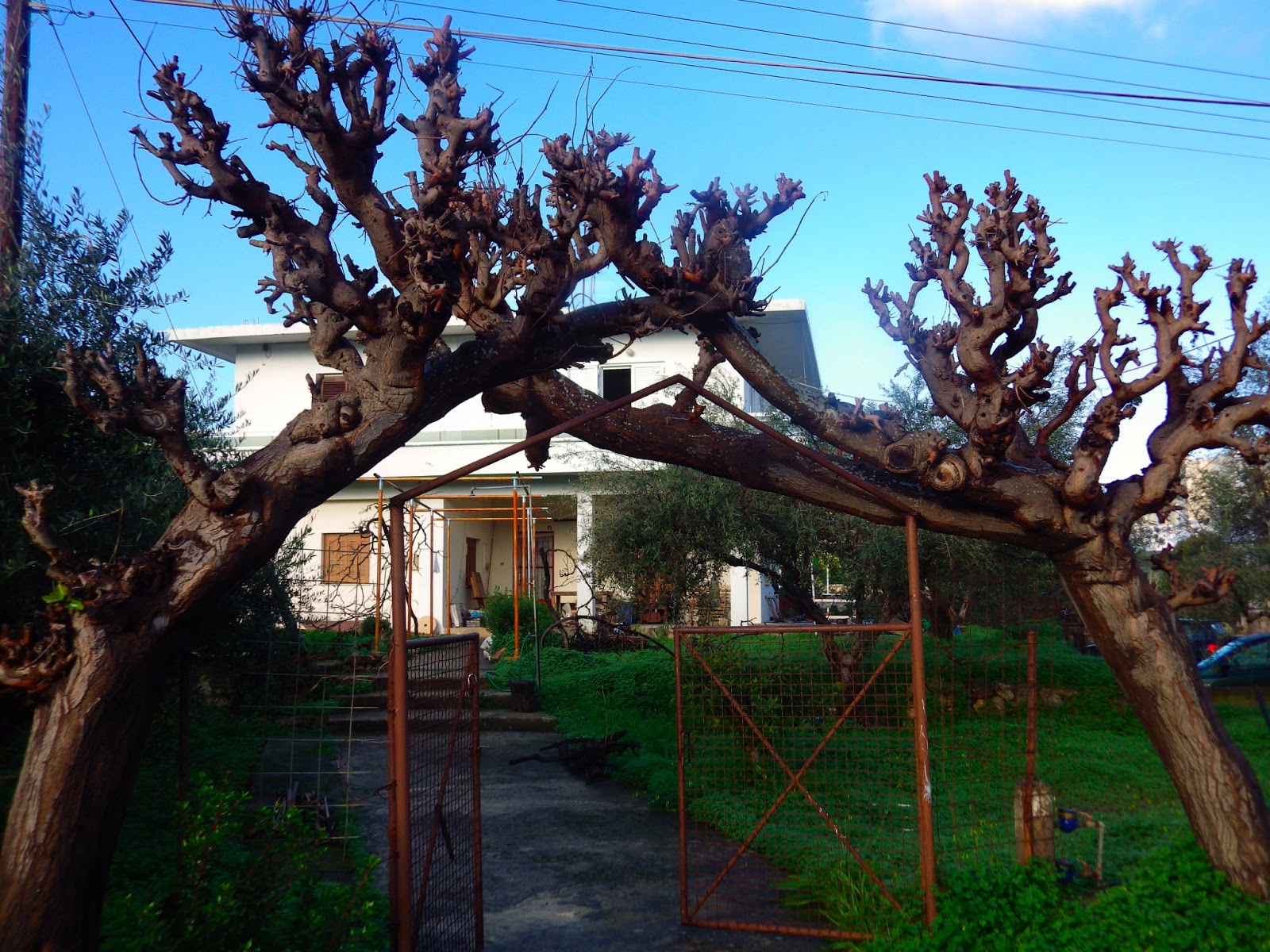
It is wonderful to be back in Crete. This is an enchanted place and continues to be every bit as alluring and surprising as on my first visit in last winter. For this visit we have rented a small Cretan cottage in the village of Perivolia, an agricultural community, south of Chania and up against the White Mountains.
 This is a great location from which to study and travel. We are quite private in this quiet little corner of the village yet we can be in the Old Town of Chania in 15 minutes.
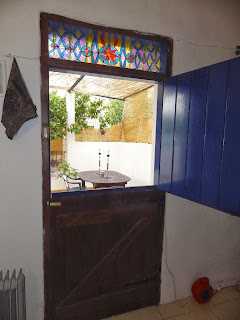 Our cottage is an old farm house complete with stable door and traditional architecture and furnishings but a large modern bathroom and kitchen makes for very comfortable living quarters. Our landlady, Sally, is lovely to deal with and we have the added bonus of our neighbour Nikos, the gregarious and very friendly taverna owner, just on the other side of our gate. We have merely to lift the garden gate latch and stroll into his excellent taverna for a late night meal.

 The village appears to be quite prosperous with many modern homes dominating the area yet it is dotted with older buildings that point to the way it was. Perivolia is known for it's produce. The village has good water and plenty of it making it ideal for the orchards.

Dotted around the village are remains of older buildings fallen down. These make for great pictures and insight into how these were constructed.
Resurrecting older homes in Crete is often not difficult. Once the debris is removed the old walls, being of stone construction, can simply be rebuilt or added to blending old and new in interesting combinations. In these tough economic times, however, money is always the issue.
 This is the path down to our cottage where we pass a newer home on the left and older buildings on the right. The community dogs welcome us loudly each time we pass but they seem to be getting more used to us and thus a little less standoffish and less noisy at our passing. Perhaps some dog treats will help.


Everywhere the colours of the foliage and plants augment the sites. This is our front gate opening into the courtyard where we spend time writing and relaxing in the warm evenings. The weather here is still in the high 20s all the time and today will be over 30 again so maybe it will be a beach day as we explore the Gramvousa Peninsula on the west coast, about 45 minutes away. The beach at Phalasarna is well known and I am looking forward to exploring it. At every turn on our daily exploration drives are fascinating churches, often dating back to the 11th century and decorated with exquisite frescoes and mosaics.


Here is something interesting to note. A cut piece of olive wood [above] has been interwoven in this fence and it has grown there surrounding the wire. I'll have to learn more about this wood as it has nothing but its internal resources to grow with.
Someone found this piece of olive wood. It is all one piece and forms the strikingly good outline of the kri kri, the native and increasingly rare wild mountain goat.
 We went to Elafonisi on the southwest side of the island one particularly hot day. It is not an easy place to get to as both roads, either the cross country mountain road or the scenic coastal road involve negotiating difficult terrain and breathtakingly tight mountain switchbacks and thus slow travel. When you can peel your eyes from the roads, the views more than compensate for the lengthy journey. Here is the view of the Libyan Sea from a high mountain taverna.


 Elafonisi beach is a pink sand beach with gin clear water and panoramic views of mountain and sea. This picture above right shows the area from the mountain pass while the shore picture tries to capture the alluring pink colour that is subtle but ever present.
Snorkelling one of the reefs I found myself in a large school of barracuda type fish, although these were only about 10 inches long. This school of many hundreds of fish swam in a slow circle around me completely engulfing me in a world of their silvery glow.


 This is a great location from which to study and travel. We are quite private in this quiet little corner of the village yet we can be in the Old Town of Chania in 15 minutes.

 The village appears to be quite prosperous with many modern homes dominating the area yet it is dotted with older buildings that point to the way it was. Perivolia is known for it's produce. The village has good water and plenty of it making it ideal for the orchards.

Dotted around the village are remains of older buildings fallen down. These make for great pictures and insight into how these were constructed.
Resurrecting older homes in Crete is often not difficult. Once the debris is removed the old walls, being of stone construction, can simply be rebuilt or added to blending old and new in interesting combinations. In these tough economic times, however, money is always the issue.
 This is the path down to our cottage where we pass a newer home on the left and older buildings on the right. The community dogs welcome us loudly each time we pass but they seem to be getting more used to us and thus a little less standoffish and less noisy at our passing. Perhaps some dog treats will help.

Everywhere the colours of the foliage and plants augment the sites. This is our front gate opening into the courtyard where we spend time writing and relaxing in the warm evenings. The weather here is still in the high 20s all the time and today will be over 30 again so maybe it will be a beach day as we explore the Gramvousa Peninsula on the west coast, about 45 minutes away. The beach at Phalasarna is well known and I am looking forward to exploring it. At every turn on our daily exploration drives are fascinating churches, often dating back to the 11th century and decorated with exquisite frescoes and mosaics.


Here is something interesting to note. A cut piece of olive wood [above] has been interwoven in this fence and it has grown there surrounding the wire. I'll have to learn more about this wood as it has nothing but its internal resources to grow with.
Someone found this piece of olive wood. It is all one piece and forms the strikingly good outline of the kri kri, the native and increasingly rare wild mountain goat.
 We went to Elafonisi on the southwest side of the island one particularly hot day. It is not an easy place to get to as both roads, either the cross country mountain road or the scenic coastal road involve negotiating difficult terrain and breathtakingly tight mountain switchbacks and thus slow travel. When you can peel your eyes from the roads, the views more than compensate for the lengthy journey. Here is the view of the Libyan Sea from a high mountain taverna.

 Elafonisi beach is a pink sand beach with gin clear water and panoramic views of mountain and sea. This picture above right shows the area from the mountain pass while the shore picture tries to capture the alluring pink colour that is subtle but ever present.
Snorkelling one of the reefs I found myself in a large school of barracuda type fish, although these were only about 10 inches long. This school of many hundreds of fish swam in a slow circle around me completely engulfing me in a world of their silvery glow.
Chania remains a favourite place for me. The Old City, Venetian in origin, is wonderful at anytime, but has a special magic at night. This is the shoulder season so everything is open but without the pressing crowds of summer and also without the oppressive heat of summer that can often exceed 40C.
Cool evenings and a late supper in a beautiful outdoor setting makes a nice end to another wonderful day on Crete.


Below, the harbour of Chania's Old Town at night