Showing posts with label Greece. Show all posts

Saturday, July 4, 2015

Street Talk on the Greek Referendum, Voting Day

Today is the voting day when the people of Greece will make a choice.

Yes or No?

 "Nai" means "yes" in Greek and "Oxi", pronounced "O-shee", means No


Today's Referendum Question:

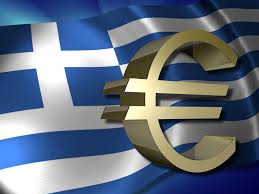
Will it be a yes to the Eurozone and compliance with the bailout packages that are offered together with the oppressive terms and conditions that will accompany the continuing bailout.

Or will it be No and the tremendous uncertainty that will accompany a no vote up to and including possible expulsion for the Eurozone and the need to create a new currency.

Either choice brings more depression in the economy and a steadily falling standard of living.

[The pictures in this post are from the village of Kalives yesterday]


I talked to several Greeks and ex-pats in the villages the last two days as I went about my business. In the hardware store some young men and some elderly men stood for 30 minutes to explain the reasons they are voting no.

A generalized fear is that the vote has already been fixed by the Yes side. The Yes side is viewed as the "have money side" and is composed of the wealthy who are making money on the suffering of the people and lack compassion.

That alone is a frightening line of thinking and a precursor to revolution. They feel that with so many voting No that if the results are Yes vote then the vote was rigged.

But the polls  consistently show it is far too close to call.

One of the elderly men repeated over and over that here the "people eat the money". It took me a while to grasp that what he wanted me to appreciate is that euros go to buying food and the people- especially the elderly who have seen their pensions slashed, are hungry.


Soon after one of the young men said "Ella- ella", "come, come" and he took me out to where a rusty truck was parked with some vegetables in the back. He told me some of the farmers from up in the mountains villages come each day and put food in the back of the truck for anyone hungry to take.

There was almost nothing left. Just scraps of vegetables.


What was interesting, or perhaps more accurately- alarming, is a consensus that a Yes vote would suit the "masters" just fine as France and Germany are using the Eurozone crisis to "enslave" the poor countries like Greece, Italy, Spain and more. They see it as the goal of the rich and powerful to put everyone under a new global economy of oppression which is why they must vote No even though this choice is wrought with unknown risks of great gravity.

Yes = "sign your life away"
No = "freedom for Greeks"

The extreme positions and thinking that accompany these positions is quite unnerving. The analysis or the evidence to back some of these claims appears to be missing from the conversation.

The new bailout is being increasingly called by the "New Treaty of Versailles" [the original treaty ended WW1 with such extreme penalties for Germany that it may be the greatest single cause for the renewed hostilities of WW2]. Again- an example of an extreme position which invokes and many dangerous images.


The vote will have some irregular practices. For example they told me that the voting boxes will be open and not the usual slot topped box we are familiar with. They believe this is so everyone can see the last voters choice. If anyone knows whether or not this is true I would appreciate and update on that front.

The euro is seen as the devil's money. The European Central Bank [ECB] with austerity has robbed the Greeks of their ability to care for the elderly.


The International Monetary Fund published a report a short time ago stating that from the 240 billion euro bailout 89% went straight to the banks for debt relief. Of the 11% that made it to Greece it is estimated that at the most, half of that made it into the general economy. The other half has disappeared.

If there is a Yes vote and the terms of a renewed agreement with the Troika occurs it will mean cutting the pensions again by half, lowering minimum wage for a third time and putting an absolute end to collective bargaining in Greece.

What would you call this if was happening to you?

Remember the economic crisis in the US saw massive sums of money going to the banks at public expense and a financial punishment of the those most vulnerable. The same pattern exists here.

How would you vote if you were making a choice under these circumstances after years of failed austerity?

One business owner whom I trust told me that international shipping containers destined for Greece slowed in recent weeks and has come to a complete halt about a week ago. Nothing is coming into Greece in terms of import. If that continues then real shortages are on the immediate horizon.

Neither a Yes nor a No choice will mean relief for Greece. Whatever the results today there is a long and difficult road lying before this country and whatever the vote, the rich will undoubtedly find opportunity to make more money at the expense of vulnerable people.

Today will set this country on a new road- which road it will be is the choice today.


Thursday, July 2, 2015

Greece in the Crosshairs of Crisis

A Chinese blessing says, "may you live in interesting times". 

Buying a villa in Greece during an economic crisis certainly is interesting. Now the country has made it's way into the unchartered waters of being forced out of the Euro zone, a move for which there is no formula nor precedent.

The debate over the pending referendum to be held in two days is hot. Early polls suggested the No vote- or the vote to tell the EU to stick it,  was going to win easily. 


But now that people have had a taste of what expulsion or leaving will look like, the vote appears to be swinging the other way. But even a Yes note is fraught with uncertainty and is far from a solution. 

One lady I spoke with yesterday in Chania said "even if she has to go back to her village and live off her garden and 20 olive trees, it will be better than what she experiences now. There is not much ambiguity here. People are clear in their choice. They are scared. 


If Greece chooses to stop using the Euro and goes back to its historical currency called the drachma there is even greater cause for concern. Greece has nothing to base a new currency on at this time. So what is suggested is a "haircut".

This kind of haircut will see the Government take a substantial portion of everyone's bank account and savings to be used to establish a base for the new currency. This seizure could be as much as half or more of all bank accounts. That alone is a major cause for concern.


Many businesses only take cash. One taverna we ate at last evening said they needed cash in order to buy the next days' supplies as suppliers are not offering credit -even very short term credit, at this time. The local gas station manager only buys each morning, the gas she can sell that day and thus often runs out. 


The media- especially the foreign medias, are using fear to sell papers thus the worst fears are highlighted. Tourists are here on vast numbers, but they are spending far less than they used to. One person we spoke to said the Greeks "need the love from others" to help get past this. By love she meant coming here and spending.

We, my wife and I, have been gleaning the media, consulting with other ex-pats on Crete and drawing from any other well that may offer wisdom at this time.


To say we live in interesting times in Crete only begins to describe our reaction. Yet, at the end of the day, we remain observers in the Greek political arena and are simply along for the ride. It is not for us to voice an opinion too loudly as we need to live here and the fractures from this vote and crisis may be long lived. 


So these blog entries will focus on the view from where I sit.

To begin - a briefing on the current history to this crisis. The current Greek economic crisis has many tentacles and roots that often exceed my skill in macroeconomics to comprehend. Never the less I try. 


The current crisis is the result of poor choices by everyone involved. The sheer number of official voices and deeply vested competing interests complicates it. 

It begins with the Greeks, their culture, way of life and outlook on the world, their history and of course their roller coaster political life that has characterized them all through modern times. 

Tax avoidance is a matter of some honour for the Greeks. The Greeks do not seem to share a social contract such as many Canadians do who, as we pay our substantial taxes reluctantly, also see that we are supporting all that makes Canada work. It appears the Greeks have a different focus. Their major spheres of interest are family, village and church. The greater whole, well, it is an ambiguous relationship.


Social responsibility is different here. To say it is lacking is, of course, nonsense but to say it is other appears to be true. The Greek norms are quite foreign to us. We experience these wonderfully in such things as Greek graciousness and hospitality yet we can be perplexed at the general acceptance of such things as corruption and the all pervasive underground economy as the natural way of doing things.


On the other side is a myriad of groups and institutions beginning with the three major players.  The EUC [European Union Commission, the ECB [European Central Bank and the IMF [International Monetary Fund] together are called the Troika and it appears they have trouble talking to one another thus agreements are made by one body, altered by another or rejected by the third. It all makes for ongoing uncertainty from that front.


Certain leaders such a Germany’s Merkle also muddy the waters inserting their own vetoes and demands.

In short there are simply too many voices at the table for a meaningful negotiation.


Last year things were looking like the worst might be over. Unemployment was improving and Greece was beginning to move towards balancing the books.

But all that suddenly changed when a snap election was called and a coalition of the left – the Syriza party, ran on a platform of renegotiating austerity believing that the Troika would have to comply with Greek demands and grant a better deal.

The gamble has failed spectacularly

What has happened, simply put, is that everyone has boxed themselves into a corner. Syriza said no way to the Troika and now the EUC and the Troika say no way to the Greeks.

For some unfathomable reason PM Tsiparas [above], has called a snap referendum vote without a clear question. There is little time to debate or think and little meaningful information to go on. The strategy seems to be that a knee-jerk reaction by the Greeks voters will influence the Troika in ways favourable to Greece.

The Greeks are an emotional people and it looked like there was clearly going to be a 60% “No” vote to staying in the EU and complying with the bailout formula.


With the banks closed and with withdrawals severely limited the Greeks got a taste of what No will mean it now appears that number is reversing and about 60% will vote Yes. Yet if that happens it will mean the Greeks have rejected Syriza who they just elected and there may need to be a new election and everything begins all over again. But another serious question is whether or not the EU patience with Greece is nearing its end.


To say it is a mess is too simple. It is a tragedy. People are suffering and it appears the pain is growing and may begin to avalanche soon.


One analysis I find helpful to understand the Troika’s position is that Greece is not alone with an economy in crisis. Italy, Spain, Portugal and Ireland are struggling with extreme debt. It may be the Troika is making an example of Greece to scare these other countries into compliance with the Troika.

As I recall Napoleon encouraged his officers to shoot some soldiers from time to time to “encourage the others”.  Has the Troika come to a similar conclusion?

So Sunday's vote looms on the immediate horizon and there is little chance that whatever happens will mean relief for the Greek people. This will go on and on no matter the choices. 


For those in Canada this should not be seen as simply an EU problem. New Brunswick it flirting with similar excessive debt and the story from here could become the story there. 

The banks are a powerful reality in our lives and they do not have a human face such that they can easily be compassionate. The bankers are accountable to investors who have come to expect a healthy annual return on their investment. Taken together all these forces point to how unsustainable the structures that have served us so well in the past have become. 

As Ghandi observed many years ago, "there is enough in this world for everyone but there is not enough for everyone's greed". 


Sunday, October 27, 2013

A Window On Living on Crete


This blog entry is brief [or a window] on what it is like to live on Crete. Crete is an island with the Cretan Sea to the north and the Libyan Sea to the south. It is 250 km long not very wide at any point

This picture of Crete shows how mountainous it is and also how it sits at the bottom of the Greek Archipelago. 


This blog entry is about the day to day necessities of learning to live here.

Our village, Periviola, is off the beaten track for tourists so we are an oddity in the village. People are beginning to recognize us. Neighbours greet us now, the village dogs come running for their treat [which we keep in our car] and the old men in the taverna wave to us as we pass.


We are living in a cottage and as such we shop, II I am learning Greek. I can count to 20, I know my colours and a few other words of politeness such as hello, thank you, please etc so I almost qualified to go to pre-school.  A few days ago I ordered my meal entirely in Greek and got exactly what I expected! The local butcher practices his English with me and I work on my Greek with him. "micro" for little and "meso" for half and so on.


Learning to shop is one of the best ways to become accustomed to the Greek culture. A few days ago out cottage toilet seat broke and had to be replaced. 

So first of all there are no big stores here such as Home Depot where you go  for all household repairs. There is one store for wood, another for tiles, another for plumbing fixtures and another for plumbing hardware. It takes a long time to get anything done because everything involves a series of slow steps.

So when I found my new toilet seat I learned a lesson about doing business. It is slow, one person makes the sale and notifies another who makes up a receipt and brings it to me and I go to still another who the money. All this through a constant stream of interruptions and diversions. Nothing here happens quickly. I have to step back and enjoy the experience. "Saga saga", slowly slowly. 


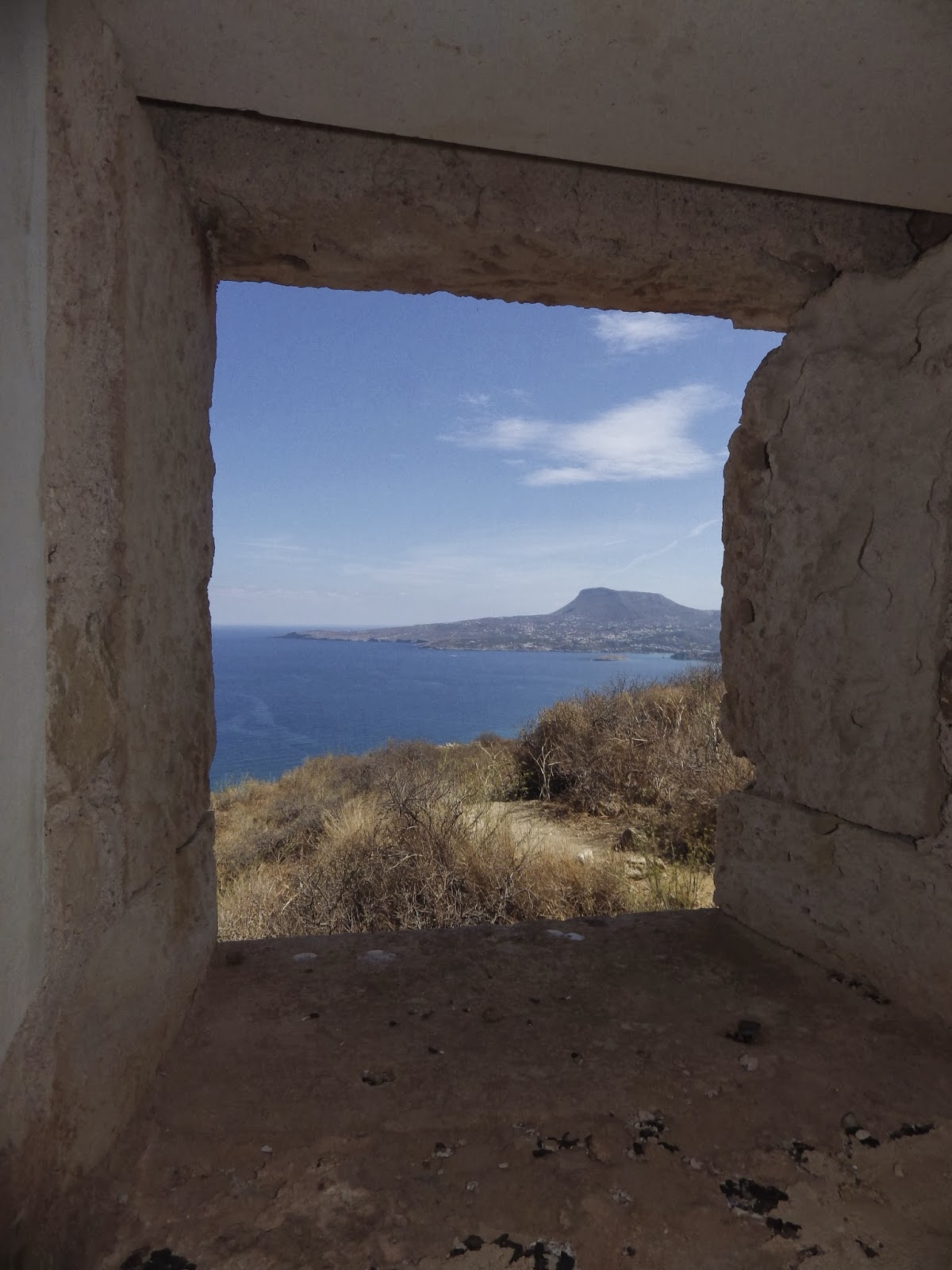
Accompanying the entries of the blog are some window pictures I have taken of new and old windows.  Windows, like doors, [the last blog featured doors prominently] are physical features of our homes that are interesting and as this is a "window" on Crete for those not familiar with it, pictures of windows new and old will pepper this introduction to day to day life on Crete. So sit back and enjoy.

This is our window from last winter overlooking Chania harbour.
It can be helpful to become lost from time to time. We are living on the outskirts of Chania, the second largest city on Crete. It is similar in size to Fredericton. Being close to the city this trip has given me the opportunity to learn the streets and routes through it.

When I have time I take a new road, get disoriented and wander through the area until I find somehting I know and then I have learned a new road.  It's fun and a real challenge at times as there are no blocks as we know them. Being 'lost' is the best way to become aware and to learn.


I remember when I studied chess my 'master' reminded me I could not learn in if I won- only if I lost. How true is that of life? Only when we are at a loss do we learn!

Wandering around a new culture is a form of being lost, observing and testing until I get it right.


Driving on Crete is an experience. It is a balance between staying far right at all times, as the guy behind may pass at any time and motorcycles weave around me at will, yet watching for the car door about to open in my path or pedestrian shoot out from between parked cars. Showing courtesy is a fast way to an accident. Pedestrians will walk straight at me but I do not stop as the guy behind will plow into me. The pedestrians, who are all over the road, simply look out for themselves.   I learned to drive in Montreal in the days when driving was  this crazy so it is a return to my roots and is still very familiar.  Note this traffic light right.

Traffic lights [above]are surprisingly well obeyed, contrary to stop signs which are merely suggestions. The traffic lights are not positioned opposite as we have but on the same side so when I pull up I need to stay far enough back to be able to see the green. If I get too far forward the fellow behind will beep when it is green. Of course he may beep for many other reasons as well so being first in line is a moment of some angst.
Road signs are in Greek and English which is helpful. But the youth regularly spray paint over the English. These signs also help me learn to pronounce Greek words as well. 
Food is one of the true delights of Crete. Whether it is eating out or going to the market, or even the grocery store the food is wonderful. We eat mostly a Cretan diet which is high in cheeses and vegetables.

We took our British ex-pat friends out for an antokristo meal at the taverna beside our cottage. Nikos, the owner-chef set up this authentic Cretan restaurant both as a passion and a business. Each night we have eaten there it has been full and on one evening stand room only

Pictured here is the modern Antokristo method that models an ancient time when meat was cooked beside the fire. This is a slow roast method that results in succulent meat. We had land, pork and chicken along with loads of wine, salads and of course raki. One can not have a proper Cretan table without raki.


The markets are everywhere and fresh food is readily available. The grocery stores are wonderful to shop in. First the number of items are not overwhelming but everything is here. Many products have enough English or a picture so they can be identified. Prices are very good. 


To buy hamburger  called mince here, I go the butcher and pick the piece of meat I wish and he grinds it right there. Like the way I remember as a kid but more to the point- I get to see the quality before it is rendered unrecognizable. 

Sampling cheese or olives is expected. There is far less industrial food than we might expect to see and far more fresh. If I want two eggs I can but two eggs- fresh. Vegetables are not perfect- they are often blemished as healthy vegetables are and in the larger stores a clerk is standing by to weigh and price items at the scales. 


There are few chain stores and no power centres. There is one road called the Souda Road where many speicality stores are spread out over several clicks but a drive down that road will bring you to most everything including the Ikea.

This pic on the right is of Naxos harbour taken from the window of the ambassador's office on the island of Naxos.


The pharmacy on Crete is an interesting case where the Cretan's are a long way ahead of us. First of all the signs are prominent and feature a green cross. Some are more elaborate such as this one with other images. But it is inside that is of interest. Pharmacists can hand out antibiotics and other drugs for readily recognizable symptoms, without a prescription, such as ear infections, bladder infections, sinus infections. Or they can send you directly to the hospital for a test to determine which of two or three things may be at issue. So no need to go to  the doctor if you onow what is wrong. Makes sense does it not?

The eyes are the windows of the soul. -- Thomas Phaer (c.1510-1560
A smile is a window in your face to show your heart is at home. -- unknown 


The end.... for now